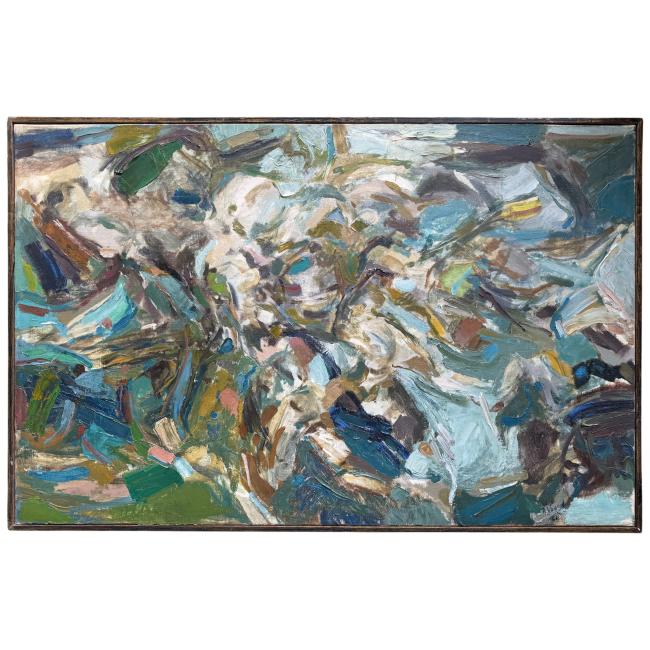
Shafic Abboud
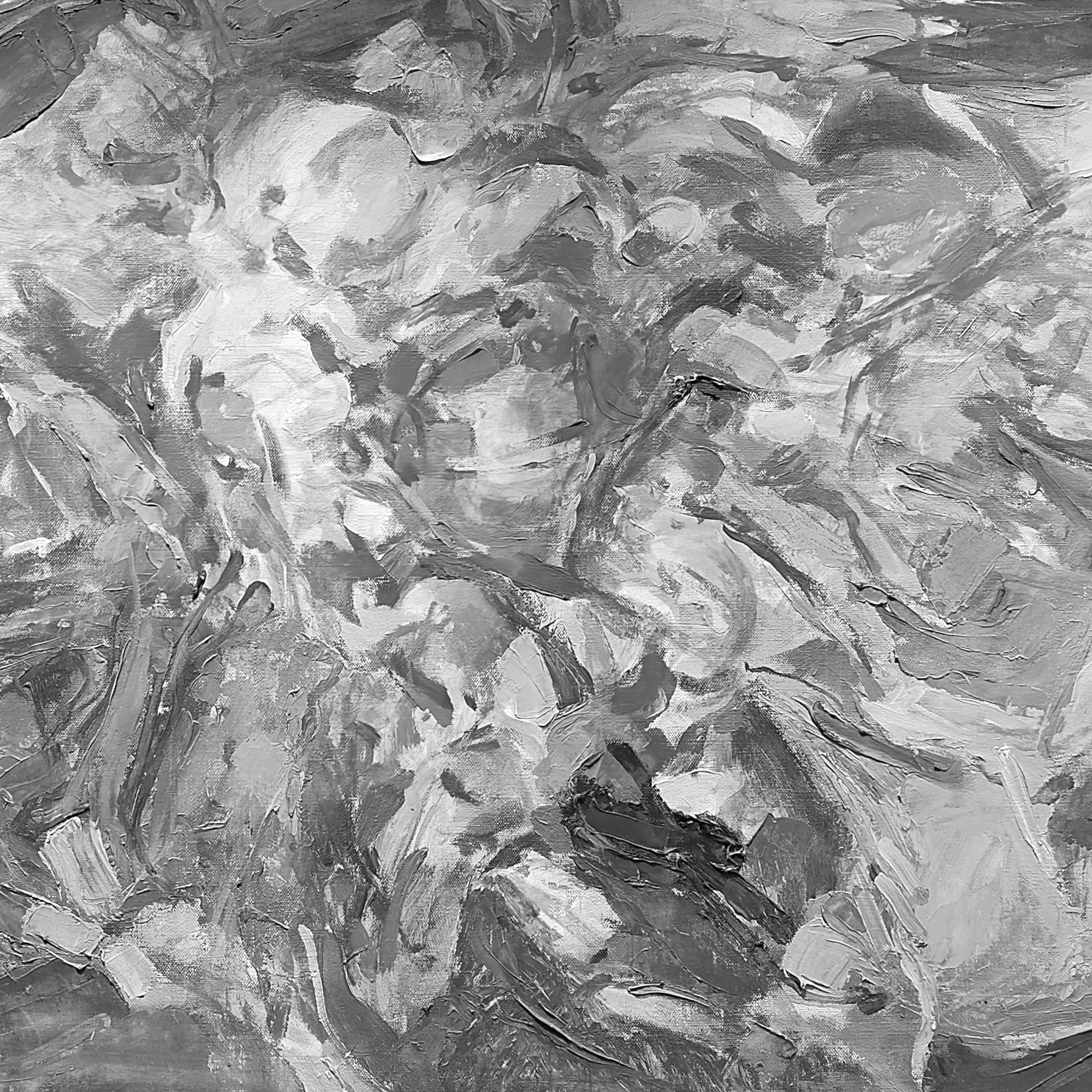
Shafic Abboud (1926–2004)
The painting of Shafic Abboud occupies a rare space: that of an abstraction which never fully breaks away from the sensory world, but instead retains its essence—light, rhythm, and trace.
In Abboud’s work, the surface is neither a gestural field nor a constructed space. It functions as a site of emergence. Fragmented forms, sometimes close to signs, resist fixation; they float, echo one another, and overlap. Colour does not cover the surface: it appears, layer after layer, in a constant tension between restraint and intensity.
What profoundly distinguishes Abboud’s work is its relationship to time. His paintings do not reveal themselves immediately. They call for a slow gaze, attentive to what slips away. Each canvas reads as a stratification, where past gestures remain perceptible without ever asserting themselves. This silent temporality lends his work a singular presence, far removed from any rhetoric of expression.
Although Abboud shared the Parisian context of post-war abstraction, his painting belongs neither to a school nor to a manifesto. It unfolds along a personal path, where cultural inheritance, memory, and writing are not visible references but internal forces. Nothing is illustrative, nothing narrative; everything is played out in a subtle balance between appearance and disappearance.
Today, Shafic Abboud’s work stands out for its ability to resonate with contemporary sensibilities: an attention to surface, to the materiality of colour, to an economy of gesture. It offers a demanding, deeply inhabited form of painting: one that resists quick readings and unfolds over time.